
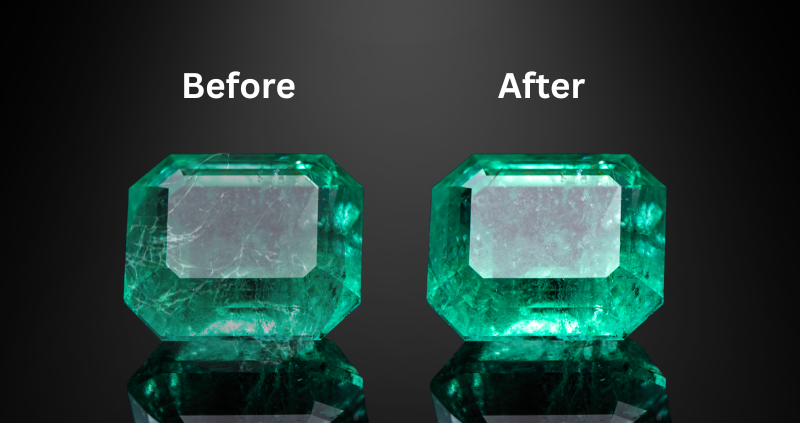
When shopping for fine jewelry, you will often come across terms like "untreated," "heated," or "enhanced." Many buyers wonder: do these treatments ruin the stone? Understanding gemstone treatments is essential for anyone looking to invest in quality jewelry. While some treatments are standard industry practices, others significantly impact a gem's market value and long-term durability.
Why Are Gemstones Treated?
Nature is magnificent, but many stones require a little help to bring out their most vibrant hues or to minimize distracting internal features. Treatments like mild heating have been used for centuries to stabilize or deepen colors in stones like sapphires and rubies as a standard industry practice.
Common Types of Treatments:
>> Heat Treatment: The most common and accepted practice. It uses high temperatures to alter or deepen color permanently and generally does not harm the stone's durability.
>> Oiling & Impregnation (e.g., Emeralds): Filling surface reaching cracks with oil or resin to improve clarity. These stones require special care and gentle cleaning.
>> Diffusion & Dyeing: Adding external agents to alter color drastically, which usually lowers the overall market value because the color is not natural throughout.
Impact on Value and Durability:
Completely untreated, natural gemstones with high clarity are extremely rare and command the highest market value. While treated stones are more accessible and budget friendly, stable treatments preserve structural integrity, whereas heavily treated stones can be fragile and sensitive to heat or chemicals. At Silon Gems, we believe in complete transparency to help you choose the perfect stone with confidence.